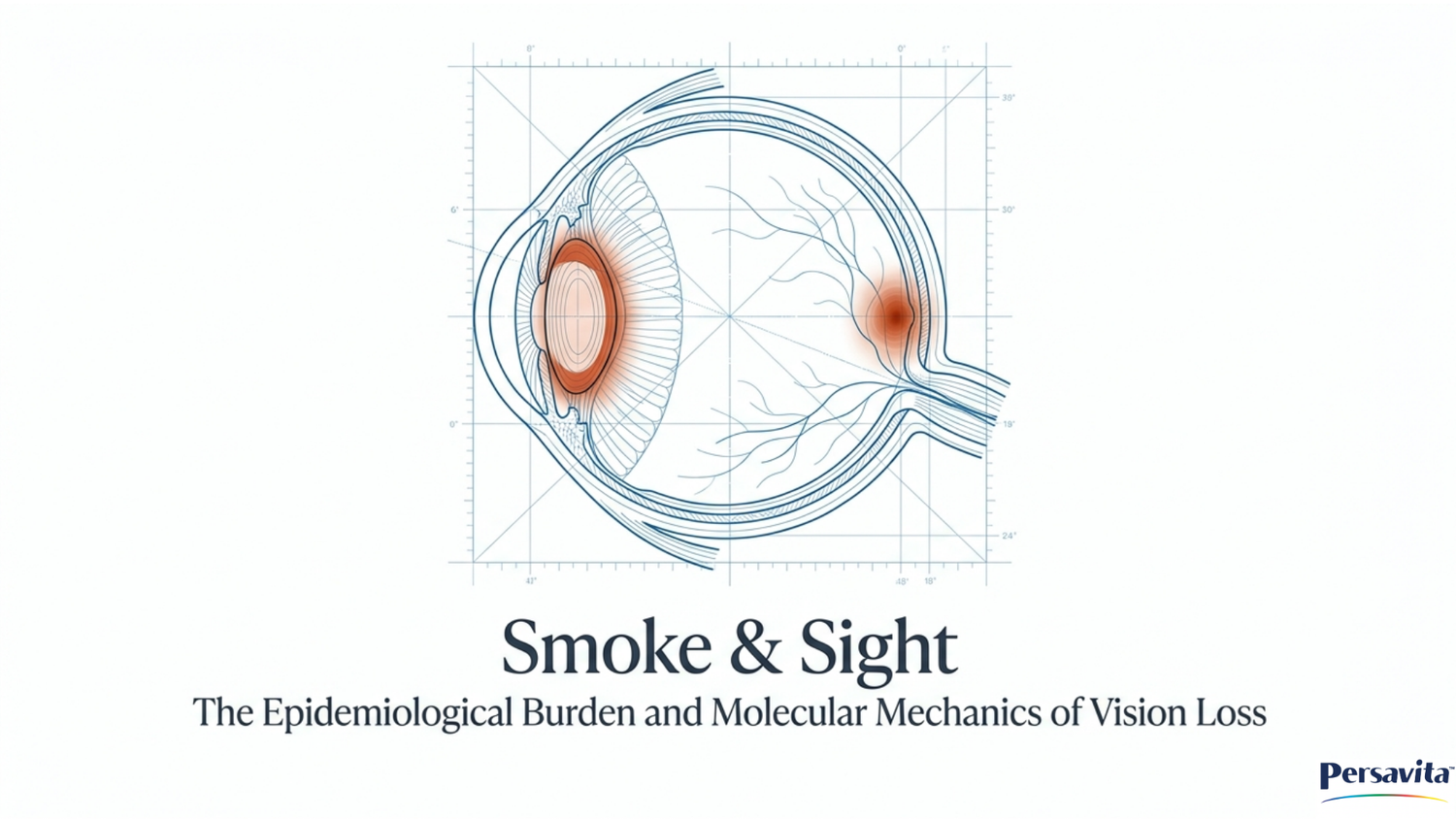
The Molecular Fog: How Smoking and Lifestyle Choices Can Threaten Eye Health
For many people, changes in vision are seen as an unavoidable part of aging. Cataracts, age-related macular degeneration, glaucoma, and other eye conditions are often discussed only after symptoms appear. But recent research is making one thing increasingly clear: our daily habits can play a powerful role in the long-term health of the eye.


A recent large-scale study published in Clinical Ophthalmology analyzed more than 12 million patients using the TriNetX global health database. After matching smokers and non-smokers for age, sex, hypertension, and diabetes, the researchers found that smoking was significantly associated with a higher 10-year risk of multiple vision-threatening eye conditions, including cataracts, glaucoma, age-related macular degeneration, diabetic retinopathy, retinal vascular occlusions, uveitis, and ischemic optic neuropathy.
The message is important: smoking does not only affect the lungs and heart. It can also affect the eyes.

The Eye Depends on a Delicate Biological Balance
The human eye is a remarkable structure. Light must pass through living tissue with extraordinary precision, especially through the lens and toward the retina. To maintain this clarity, the eye depends on a delicate balance of proteins, antioxidants, blood flow, cellular energy, and protective pigments.

When this balance is disrupted, the eye may become more vulnerable to oxidative stress, inflammation, vascular damage, and protein changes. Over time, these biological stresses can contribute to clouding of the lens, damage to retinal cells, or reduced circulation in delicate eye tissues.
This is why lifestyle factors matter. The eye may be small, but it is highly metabolically active and sensitive to long-term stress.

Smoking and Cataracts: A Strong Association
One of the clearest findings from the recent global database study was the association between smoking and cataracts.
Among matched patients, smokers had a 1.77 times higher risk of developing cataracts over 10 years compared with non-smokers. The strongest association was seen with posterior subcapsular cataracts, where smokers had a 2.6 times higher risk.
Cataracts occur when proteins in the lens lose their normal organization and begin to cloud the lens. Smoking may contribute to this process by increasing oxidative stress, reducing antioxidant protection, and exposing the lens to harmful compounds. The study discussion notes that cataract formation in smokers may be related to the accumulation of harmful ions such as vanadium, aluminum, and cadmium, increased reactive oxygen species, and reduced systemic antioxidants.
In simple terms, smoking may accelerate the “molecular fog” that interferes with lens clarity.

Smoking and Age-Related Macular Degeneration
Age-related macular degeneration, or AMD, affects the macula, the central part of the retina responsible for sharp, detailed vision. This is the part of the eye we rely on for reading, recognizing faces, driving, and seeing fine details.
In the recent study, smokers had a significantly higher 10-year incidence of AMD compared with non-smokers. The reported risk ratio for AMD was 1.85, meaning smokers had an estimated 85% higher risk than non-smokers in the matched analysis.
The authors explain that smoking has been linked to both new AMD and progression to advanced forms. The possible mechanisms include inflammation, reactive oxygen species, mitochondrial DNA damage, and accumulation of degradation products in retinal pigment epithelial cells.
This matters because the retina is especially vulnerable to oxidative stress. It is constantly exposed to light, uses large amounts of oxygen, and contains delicate photoreceptor cells that need long-term nutritional and vascular support.

Smoking and “Eye Strokes”
The study also found that smoking was associated with higher risk of retinal vascular occlusions, sometimes described as “eye strokes.” These occur when blood flow through the retinal arteries or veins becomes blocked.
The reported risks were striking:
• Central retinal artery occlusion: 2.35 times higher risk
• Branch retinal artery occlusion: 2.45 times higher risk
• Central retinal vein occlusion: 2.16 times higher risk
• Branch retinal vein occlusion: 1.64 times higher risk
These findings suggest that smoking may affect not only the clarity of the lens or health of the macula, but also the circulation that nourishes the eye.
The authors note that nicotine’s vasoconstrictive effects and increased carboxyhemoglobin may reduce retinal blood flow and worsen retinal hypoxia, which may help explain the higher risk of retinal vascular occlusion and ischemic optic neuropathy among smokers.

Other Eye Conditions Linked to Smoking
The same analysis found increased risks across several other eye conditions:
• Glaucoma: 1.57 times higher risk overall
• Ocular hypertension: 2.19 times higher risk
• Primary angle closure glaucoma: 2.47 times higher risk
• Uveitis: 2.43 times higher risk
• Diabetic retinopathy: 1.21 times higher risk
• Ischemic optic neuropathy: 1.69 times higher risk
The study authors concluded that smoking was significantly associated with increased risk of multiple vision-threatening ocular diseases and emphasized the importance of including smoking history in eye-health risk assessment and counseling.

Why This Matters for Daily Eye Health
The most important takeaway is not fear, it is empowerment.
Eye health is influenced by many factors, including age, genetics, medical conditions, nutrition, smoking status, blood pressure, blood sugar, and lifestyle habits. Some of these factors cannot be changed, but many can be improved.
Helpful daily choices may include:
• Avoiding smoking and second-hand smoke
• Following a Mediterranean-style diet rich in leafy greens, colorful vegetables, fish, olive oil, beans, and nuts
• Reducing excess sugar and highly processed foods
• Managing blood pressure and blood sugar
• Staying physically active
• Wearing UV-protective sunglasses outdoors
• Getting regular eye exams, especially with age or family history of eye disease
These habits support the body’s natural defense systems and may help reduce long-term stress on the eyes.

The Choice Ahead
The eye is not separate from the rest of the body. It is deeply connected to circulation, metabolism, inflammation, nutrition, and daily lifestyle choices.
Smoking is one of the most important modifiable risk factors for eye health. The recent large-scale evidence reinforces that the consequences of smoking extend far beyond the lungs. They may reach the lens, the retina, the optic nerve, and the delicate blood vessels that help preserve vision.

Protecting vision is not only about reacting when problems appear. It is also about supporting the eye before damage progresses.
A lifetime of clearer vision may begin with the choices we make today.


References
1. Gad El Sayed M, Pham NV, Bandaru D, et al. Smoking and Risk of Vision Threatening Complications: A Global Database Analysis. Clinical Ophthalmology. 2026;20:596936.
2. Kai JY, Zhou M, Li DL, et al. Smoking, dietary factors and major age-related eye disorders: an umbrella review of systematic reviews and meta-analyses. Br J Ophthalmol. 2022.
3. Galor A, Lee DJ. Effects of smoking on ocular health. Curr Opin Ophthalmol. 2011.

Leave a comment
This site is protected by hCaptcha and the hCaptcha Privacy Policy and Terms of Service apply.