More Than Meets the Eye: How BMI and Vascular Health Drive Macular Degeneration
When we think about the consequences of carrying excess body weight, we tend to focus on clothing sizes, joint pain, or heart health—not our vision. Emerging ophthalmic and epidemiologic research now shows a clear and concerning link: a high body mass index (BMI), central obesity, and poor metabolic health are important, modifiable drivers of age-related macular degeneration (AMD).
AMD is the leading cause of irreversible vision loss in adults over 50 in developed countries, robbing people of their ability to read, drive, and recognize faces. While age and genetics are non-modifiable risk factors, your vascular and metabolic health act as the critical bridge connecting your waistline to your eyesight.

Understanding the Target: What Is AMD?
The macula is the tiny, highly specialized central portion of the retina responsible for sharp, straight-ahead vision—the type you use to read fine print, drive safely, and recognize faces. Because it is densely packed with photoreceptors and metabolically very active, the macula is particularly vulnerable to disruptions in blood flow, oxygen delivery, and oxidative stress.

AMD typically evolves along two major pathways:
Dry (atrophic) AMD
This form is characterized by the accumulation of cellular debris called drusen beneath the retina, leading over time to thinning and atrophy of macular tissue (geographic atrophy) and gradual central vision loss.
Wet (neovascular) AMD
In wet AMD, fragile, abnormal blood vessels grow beneath the macula (choroidal neovascularization), leaking fluid and blood that can rapidly damage central vision, often over weeks to months rather than years.
Understanding how body weight influences these pathways helps patients see why lifestyle and vascular health are so central to preserving sight.
The Weight of the Evidence: BMI and AMD Risk
Epidemiological studies consistently show that excess body weight is not just a passive background factor—it actively increases the risk of both developing and progressing AMD.
Risk of Developing AMD
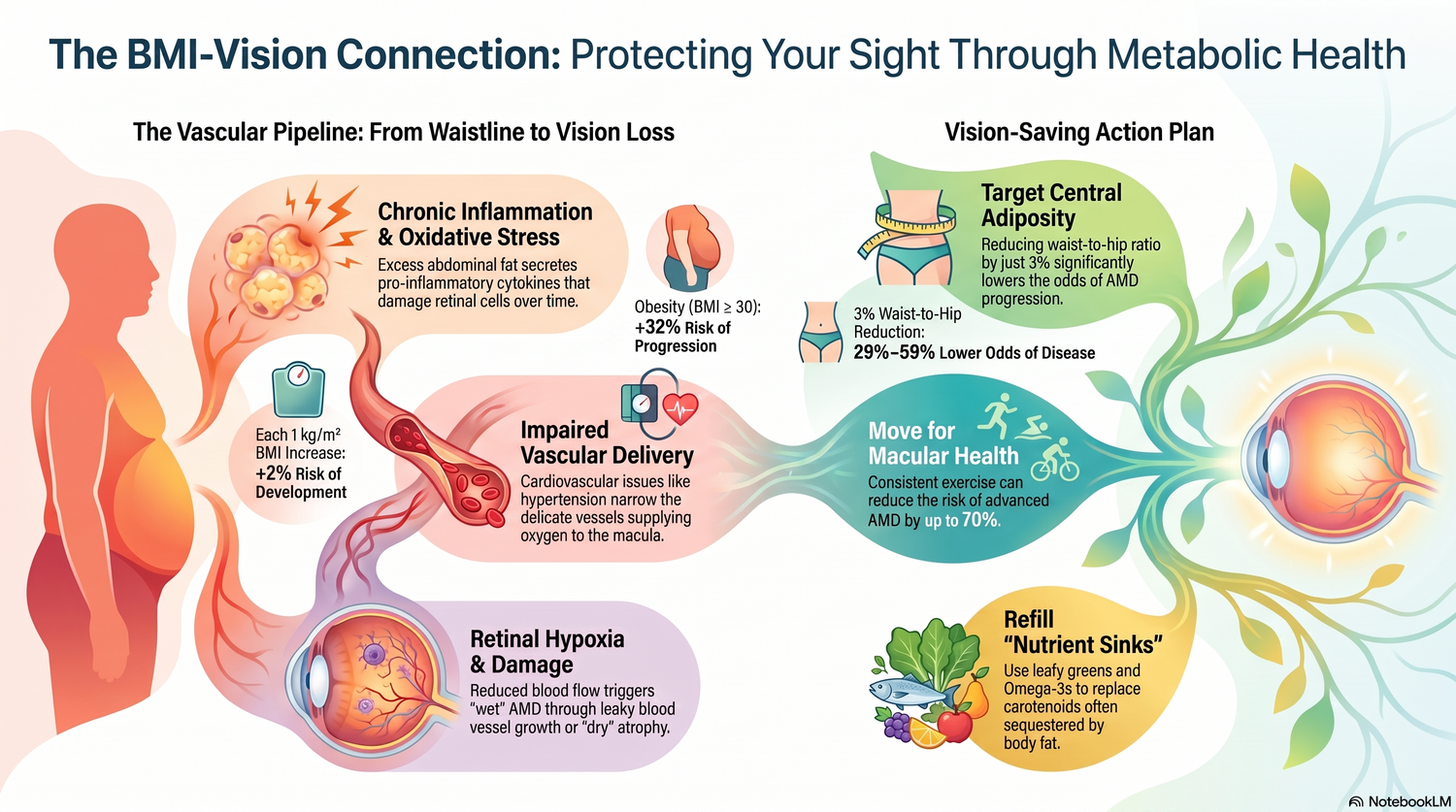
Large meta-analyses have found a roughly linear, dose–response relationship between elevated BMI and AMD risk within the overweight and obese ranges. For individuals in these categories, each 1 kg/m² increase in BMI is associated with about a 2% increase in AMD risk, underscoring that even modest weight gain can have consequences for the macula.
Risk of Progression to Late AMD
Obesity (BMI ≥ 30 kg/m²) is associated with a substantially higher risk of progressing from early or intermediate AMD to advanced disease, including both geographic atrophy and neovascular (wet) AMD. In one major cohort, obese individuals had about a 32% higher risk of developing late AMD compared with those in the normal BMI range, after accounting for other risk factors.

Abdominal Adiposity vs. BMI
General BMI does not tell the whole story. Measures of abdominal fat—such as waist circumference (WC) and waist-to-hip ratio (WHR)—show an even stronger correlation with advanced AMD. Higher WC and WHR were linked to roughly twofold higher risks of progression to late-stage disease in longitudinal studies. Encouragingly, among middle-aged adults with obesity, reducing WHR by as little as 3% over time was associated with a 29%–59% reduction in the odds of AMD, suggesting that targeted fat loss around the abdomen can meaningfully alter disease trajectory.

The Vascular Pipeline: Cardiometabolic Health and the Retina
The retina is one of the most metabolically active tissues in the body and requires a continuous, high-volume supply of oxygen and nutrients. This demand is met by a dense vascular network, including the choroid—a layer of blood vessels that sits directly beneath the retina and nourishes the retinal pigment epithelium (RPE) and photoreceptors.
A high BMI often coexists with other cardiometabolic conditions such as systemic hypertension, atherosclerosis, and Type 2 diabetes, each of which impairs this vascular pipeline. Over time, these systemic insults converge on the tiny vessels supplying the macula, reducing blood flow, increasing hypoxia, and promoting the inflammatory and angiogenic signals that drive AMD progression.

A simplified way to visualize this cascade is:
- High BMI / central obesity
→ chronic inflammation and oxidative stress
→ cardiovascular disease (atherosclerosis, hypertension) and/or Type 2 diabetes
→ compromised choroidal and retinal microvasculature
→ retinal hypoxia and oxidative damage
→ accelerated AMD onset and progression.

The Cardiovascular Connection
Obesity accelerates the development of atherosclerosis (hardening and narrowing of the arteries) and contributes to chronic hypertension, both of which reduce blood vessel flexibility and impair perfusion. The macula depends on the choroid’s fine capillary bed; when systemic cardiovascular health declines, these delicate vessels can thicken, narrow, and lose their ability to deliver adequate oxygen and nutrients.
Reduced choroidal blood flow stresses the RPE, promotes the accumulation of drusen, and sets the stage for the structural and functional damage characteristic of dry AMD. Over years, this chronic vascular insufficiency can tip the balance from subclinical changes to clinically significant geographic atrophy, particularly in individuals who also smoke or have poor dietary patterns.

The Diabetes and Microvascular Nexus
A high BMI is a major modifiable risk factor for insulin resistance and Type 2 diabetes in midlife and beyond. Persistent hyperglycemia damages endothelial cells lining small blood vessels throughout the body, including those in the retina and choroid. This microvascular injury leads to capillary dropout, basement membrane thickening, and impaired oxygen delivery, creating a state of local hypoxia in the outer retina.
To cope with this oxygen shortfall, the retina upregulates angiogenic signals such as vascular endothelial growth factor (VEGF), which stimulate the growth of new blood vessels. Unfortunately, these VEGF-driven neovessels are fragile and leaky, resulting in fluid and blood accumulation beneath the macula—the defining mechanism of wet AMD and a major driver of rapid vision loss. Thus, poor glycemic control and diabetic microvascular disease not only cause diabetic retinopathy but also intersect with the pathways that accelerate AMD.

Why Fat Tissue Is Toxic to the Macula
Excess adipose tissue is not simply an inert storage depot; it is a metabolically active organ that influences inflammation, oxidative stress, and nutrient availability in ways that are particularly harmful to the macula.

Chronic Low-Grade Inflammation
Visceral fat secretes pro-inflammatory cytokines such as interleukin-6 (IL-6) and tumor necrosis factor-alpha (TNF-α), contributing to a persistent state of systemic inflammation. Over time, this inflammatory milieu damages retinal cells and the RPE, promoting drusen formation and structural degeneration.
Oxidative Stress and Antioxidant Depletion
Obesity is associated with reduced antioxidant capacity and increased production of reactive oxygen species. The retina, due to its high oxygen consumption and continuous exposure to light, is already vulnerable to oxidative damage; layering obesity-related oxidative stress on top of this baseline burden can accelerate photoreceptor and RPE injury.

Carotenoid Dilution and “Nutrient Sinks”
The macula relies heavily on dietary carotenoids—especially lutein and zeaxanthin—to form macular pigment, which filters high-energy blue light and neutralizes free radicals. Because these carotenoids are fat-soluble, large adipose stores may act as “sinks,” sequestering these nutrients in body fat rather than allowing them to accumulate in the macula, potentially leaving the retina less protected.
Protecting Your Sight: Modifiable Steps Forward
The crucial message for patients and clinicians is that body weight, abdominal adiposity, and vascular health are modifiable risk factors for AMD, even when age and genetics are not. Interventions that improve cardiometabolic health—such as weight loss, increased physical activity, and improved diet—can meaningfully reduce the risk of AMD progression.

Clinical Insight: The Power of Physical Activity
Several long-term cohort studies suggest that regular physical activity reduces the risk of progressing to late-stage AMD, independent of weight loss. In one classic study, people with early or intermediate AMD who engaged in vigorous exercise at least three times per week had approximately a 25% lower risk of progressing to advanced disease compared with inactive peers. Other research in older adults has found that higher levels of physical activity can reduce the incidence of late AMD by up to 70% over 15 years in certain age groups, although results vary between cohorts.

Vision-Saving Action Plan
For patients, caregivers, and clinicians, a practical roadmap can translate this science into daily behavior.
Strive for a Stable, Healthy Weight
Aim for a BMI in the normal range and, critically, for reduced central adiposity. Even a modest 3% reduction in waist-to-hip ratio has been associated with substantially lower odds of AMD in individuals with obesity. Focus on sustainable changes rather than crash diets.
Optimize Cardiovascular Metrics
Work with your healthcare team to monitor and control blood pressure, lipid levels, and other markers of cardiovascular health. Keeping arteries healthy helps maintain choroidal perfusion and reduces stress on the macula.
Control Blood Sugar Aggressively
For those with prediabetes or Type 2 diabetes, tight glycemic control is essential to limit microvascular damage in the retina and lower the risk of both diabetic retinopathy and AMD progression. This often involves a combination of diet, medication, and physical activity.
Move Consistently, Not Perfectly
Aim for at least 150 minutes per week of moderate-intensity activity or three or more sessions of vigorous exercise, as appropriate for your health status. Regular movement lowers systemic inflammation, improves vascular function, and supports retinal oxygenation.

Support the Macula with Nutrition
A dietary pattern rich in leafy greens, colorful vegetables, and omega‑3 fatty acids provides carotenoids and other nutrients that support macular pigment and retinal health. For some patients with intermediate AMD, AREDS2-based supplements may be recommended by their eye care professional.
By addressing BMI, waist circumference, cardiovascular health, and lifestyle habits, individuals are not just protecting their hearts and blood vessels—they are actively safeguarding their central vision for years to come.
Frequently Asked Questions (FAQs):
How does abdominal body fat specifically influence macular degeneration risk?
Abdominal body fat, often measured by waist circumference (WC) and waist-to-hip ratio (WHR), has an even stronger correlation with advanced age-related macular degeneration (AMD) than general BMI. Excess abdominal (visceral) fat is not merely inactive weight; it is a metabolically active organ that actively damages the macula through several specific mechanisms:
- Triggering Chronic Inflammation: Visceral fat secretes pro-inflammatory cytokines, specifically interleukin-6 (IL-6) and tumor necrosis factor-alpha (TNF-α). This creates a persistent state of systemic inflammation that damages retinal cells and the retinal pigment epithelium (RPE), promoting the formation of cellular debris (drusen) and causing structural degeneration in the eye.
- Vascular Damage and Oxygen Deprivation: Central obesity initiates a harmful cascade of chronic inflammation and oxidative stress that contributes to cardiovascular diseases, such as atherosclerosis and hypertension. This systemic vascular decline damages the delicate capillary bed of the choroid, reducing blood flow and oxygen delivery to the macula (hypoxia), which accelerates AMD onset and progression.
- Acting as a "Nutrient Sink": The macula relies on dietary carotenoids, particularly lutein and zeaxanthin, to form a protective macular pigment that filters high-energy blue light and neutralizes free radicals. Because these vital nutrients are fat-soluble, excess adipose tissue traps and sequesters them in body fat, preventing them from reaching and protecting the retina.
The impact of this localized fat is significant: longitudinal studies show that higher waist circumference and waist-to-hip ratios are linked to roughly a twofold higher risk of progressing to late-stage AMD.
Fortunately, this risk is modifiable. Targeted reduction of abdominal fat can meaningfully alter the trajectory of the disease. Reducing your waist-to-hip ratio by as little as 3% can reduce the odds of AMD by 29% to 59% in middle-aged adults with obesity
How can I reduce my waist-to-hip ratio effectively?
Based on the sources, you can effectively reduce your waist-to-hip ratio (central adiposity) by adopting a "Vision-Saving Action Plan" that focuses on long-term cardiometabolic health rather than quick fixes. The recommended strategies include:
- Focus on Sustainable Habits: You should aim for a stable, healthy weight by making sustainable lifestyle changes rather than resorting to crash diets.
- Move Consistently: Aim for at least 150 minutes of moderate-intensity activity per week, or three or more sessions of vigorous exercise. Regular physical activity is critical for lowering systemic inflammation, improving vascular function, and supporting overall cardiometabolic health.
- Support with Nutrition: Adopt a diet rich in leafy greens, colorful vegetables, and omega-3 fatty acids.
- Control Blood Sugar: If you have prediabetes or Type 2 diabetes, it is essential to tightly manage your blood sugar through a combination of diet, physical activity, and medication if necessary.
- Monitor Cardiovascular Health: Work with a healthcare team to keep markers like blood pressure and lipid levels under control, which supports your overall vascular system and helps mitigate the effects of excess weight
By combining consistent movement, dietary improvements, and sustainable weight management, you can effectively lower your waist-to-hip ratio, which in turn reduces your risk of age-related macular degeneration (AMD).
How much exercise is needed to lower AMD risk?
To lower your risk of age-related macular degeneration (AMD) progression, you should aim for at least 150 minutes of moderate-intensity activity per week, or three or more sessions of vigorous exercise.
The impact of this consistent movement is significant:
- For early or intermediate AMD: Engaging in vigorous exercise at least three times per week has been shown to reduce the risk of progressing to advanced AMD by approximately 25% compared to inactive individuals.
- For long-term prevention: Research in older adults indicates that higher levels of physical activity can reduce the incidence of late AMD by up to 70% over a 15-year period in certain age groups.
As discussed previously, this exercise helps protect your vision independently of weight loss by lowering systemic inflammation, improving your vascular function, and ensuring adequate oxygen reaches your retina.
How does exercise protect vision independently of weight loss?
Regular physical activity protects your vision independently of weight loss by directly countering the underlying physiological drivers of age-related macular degeneration (AMD). It does this through three key mechanisms:
- Lowering systemic inflammation: Regular movement helps reduce chronic inflammation in the body. This is critical because persistent systemic inflammation damages retinal cells and the retinal pigment epithelium (RPE), which promotes drusen formation and structural degeneration.
- Improving vascular function: Exercise helps keep your cardiovascular system and arteries healthy. The macula relies on a dense, delicate network of blood vessels (the choroid) to receive nutrients, and improved vascular function ensures these blood vessels maintain adequate perfusion without narrowing or hardening.
- Supporting retinal oxygenation: By enhancing blood flow, exercise ensures the highly metabolically active retina receives the continuous, high-volume supply of oxygen it needs to function. This prevents retinal hypoxia (oxygen starvation), which is a primary trigger for the growth of fragile, leaky blood vessels in wet AMD and the structural damage seen in dry AMD
What lifestyle habits help preserve vision as we age?
To preserve your vision and actively defend against conditions like age-related macular degeneration (AMD) as you age, the sources recommend adopting a comprehensive approach that focuses heavily on your cardiometabolic health. These key lifestyle habits directly protect the delicate tissues of your eyes:
- Prioritize Consistent Movement: Aim for at least 150 minutes of moderate-intensity activity per week, or three or more sessions of vigorous exercise. As discussed earlier, regular physical activity is profoundly beneficial because it lowers systemic inflammation, keeps your arteries flexible for better blood flow, and ensures the retina receives adequate oxygen—benefits that occur independently of weight loss.
- Strive for a Healthy Weight and Reduced Central Fat: Instead of crash diets, focus on sustainable habits that maintain a normal Body Mass Index (BMI) and specifically reduce abdominal (visceral) fat. Reducing your waist-to-hip ratio by even 3% can dramatically lower your odds of AMD progression. Limiting central fat is crucial because visceral fat triggers chronic systemic inflammation and acts as a "sink" that traps vision-protecting nutrients in your body fat before they can reach the eye.
- Fuel the Macula with Targeted Nutrition: Eat a diet rich in leafy greens, colorful vegetables, and omega-3 fatty acids. These foods are critical because they provide dietary carotenoids, particularly lutein and zeaxanthin. The eye uses these specific nutrients to build a protective macular pigment that neutralizes free radicals and filters out damaging high-energy blue light.
- Aggressively Control Blood Sugar: If you have prediabetes or Type 2 diabetes, tight glycemic control through diet, medication, and exercise is essential. Chronically high blood sugar damages the endothelial cells lining the small blood vessels in the retina and choroid. This microvascular injury leads to oxygen deprivation (hypoxia), which triggers the growth of abnormal, leaky blood vessels capable of causing rapid and severe vision loss.
- Optimize Cardiovascular Metrics: Work with your doctor to monitor and manage your blood pressure and lipid levels. Keeping your arteries healthy prevents atherosclerosis (hardening and narrowing of the arteries), ensuring that the dense network of blood vessels beneath the retina can continue delivering the continuous, high-volume supply of oxygen and nutrients your macula requires.
Additionally, for individuals who already have intermediate AMD, an eye care professional might recommend specialized AREDS2-based supplements to further support retinal health


References:
- Yan Q et al. Overweight, obesity, and risk of age-related macular degeneration. Invest Ophthalmol Vis Sci. 2016.
- Klein R et al. Progression of age-related macular degeneration. JAMA Ophthalmol. 2003.
- Sun C et al. Changes in abdominal obesity and age-related macular degeneration. Arch Ophthalmol. 2008.
- Macular Disease Foundation. Weight reduction can decrease risk of late AMD.
- Coastal Eye Institute. Are you at risk for macular degeneration? Obesity, activity, and AMD progression.
- Giddens Optometry. Age-related macular degeneration and obesity.
- Canadian Association of Optometrists. The link between obesity and eye health.
- Review of Optometry. Physical activity reduces risk of early AMD.
- Macular Disease Foundation. Exercise can help prevent or slow macular degeneration.
- Physical activity and age-related macular degeneration: systematic review and meta-analysis.

Leave a comment
This site is protected by hCaptcha and the hCaptcha Privacy Policy and Terms of Service apply.